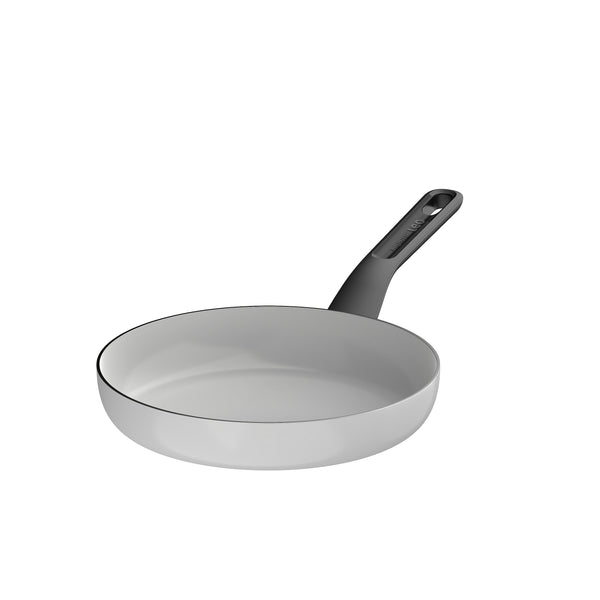
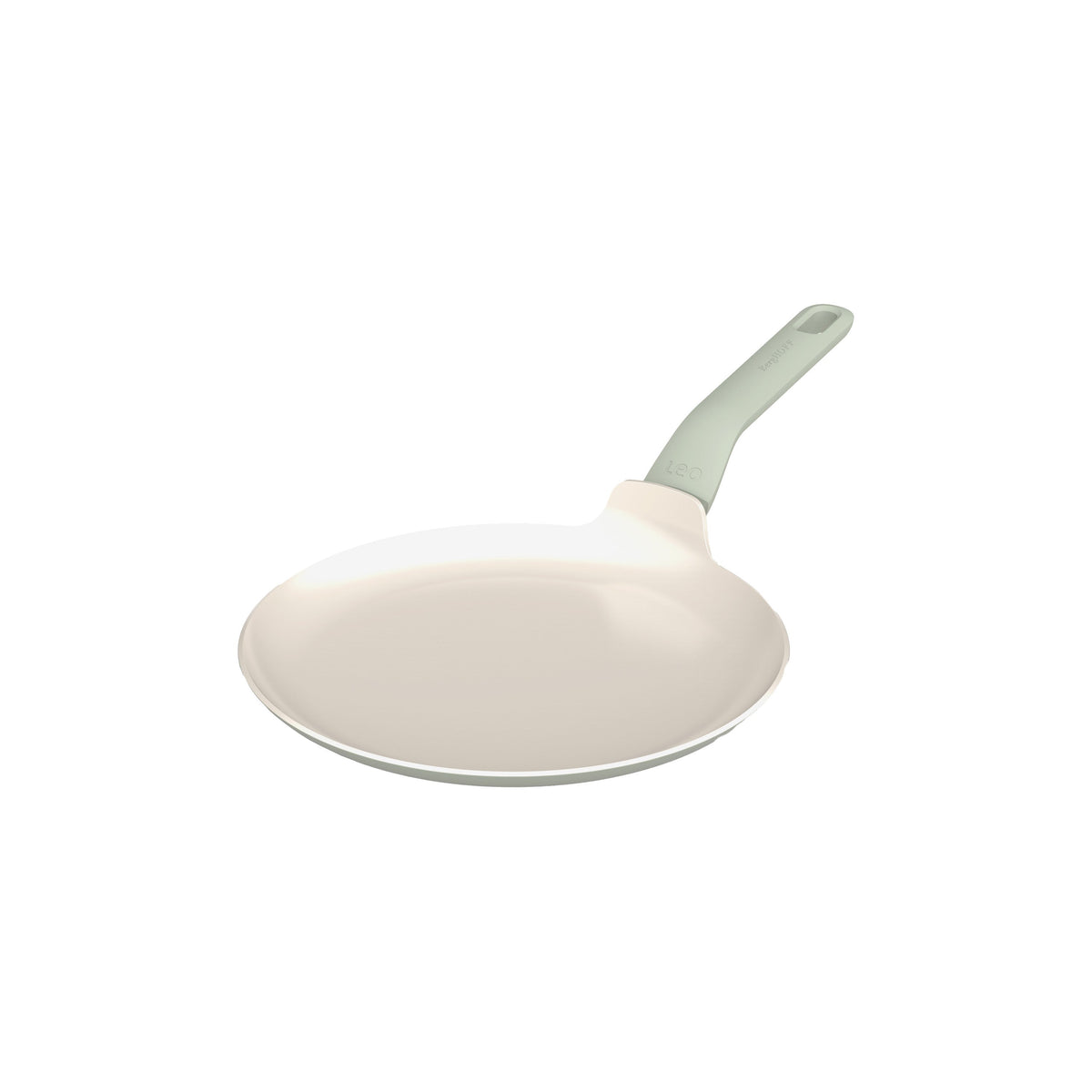
Quick answer: the best pancake pan for most homes is a light non-stick pan with a low rim, about 24–26 cm across. The low rim lets you slide a spatula under a thin crêpe, and the non-stick surface means you only need a trace of butter. For thick American-style pancakes, any flat non-stick pan works, and a larger 28 cm pan lets you cook two or three at a time. On an induction hob, check that the pan is marked for induction.
This guide explains what makes a pancake pan different, which size suits which pancake, how the coating should be treated and how to get an even, golden result from the first pancake to the last.
What makes a pancake pan different from a frying pan?
| Pancake pan | Frying pan | |
|---|---|---|
| Rim | Very low, so the spatula slides under easily | Higher, sloped sides |
| Base | Wide, flat cooking surface | Flat, but smaller usable area at the same diameter |
| Weight | Light, easy to tilt and swirl batter | Varies, often heavier |
| Best for | Crêpes, thin pancakes, tortillas, flatbreads | Everything else: meat, vegetables, eggs |
You can make pancakes in an ordinary frying pan, but the higher sides make it harder to swirl the batter thin and flip it cleanly. For choosing an everyday frying pan, see how to choose a frying pan.
Which size pancake pan do you need?
| Diameter | Good for |
|---|---|
| 24 cm | Thin pancakes for one or two people, smaller hob zones |
| 25–26 cm | Classic crêpes and thin pancakes for a family, the most versatile size |
| 28 cm | Large crêpes or wraps, or two or three American pancakes at once |
Match the pan to your hob zone. If the pan is much wider than the zone, the edge stays cooler than the centre and pancakes brown unevenly. More on sizes in frying pan sizes: 20, 24, 28 or 32 cm.
Crêpes or American pancakes?
Crêpes and thin European pancakes
Thin batter needs a low rim and a pan light enough to swirl with one hand. A 24–26 cm pancake pan is ideal. Medium heat is enough: the batter sets in under a minute, and you flip when the edge lifts.
American pancakes
Thick batter does not spread, so rim height matters less. What counts is even heat across the whole base, so every pancake browns at the same rate. A 28 cm pan holds two or three at once.
Omelettes
An omelette pan looks similar but usually has slightly higher, more curved sides to hold the eggs while they set. If you make both, choose by what you cook more often, or keep one of each, for example the Graphite non-stick omelette pan 25 cm, which is oven-safe to 230 °C.
Coating, material and induction
All BergHOFF pancake pans have a recycled aluminium body, which heats quickly and evenly, and a CeraGreen ceramic non-stick coating, which the manufacturer states is PFAS-free. They suit all hobs, including induction.
To make the coating last:
- cook on low to medium heat, never heat the empty pan on full power;
- use wooden, silicone or nylon utensils;
- let the pan cool before washing, and wash by hand with a soft sponge;
- avoid oil sprays, which can leave a sticky film.
If you are unsure whether your hob and pans are compatible, see our induction cookware guide.
BergHOFF pancake pans compared
| Model | Size | Oven-safe | Notes |
|---|---|---|---|
| Glints Spirit | 24 cm | 180 °C | Waterdrop base |
| Stone+ | 25 cm | 180 °C | Low edge, recycled cast aluminium |
| Dune | 25 cm | 180 °C | Low edges, dot-pattern base |
| Phantom | 25 cm | 180 °C | Full disc base |
| Balance (Sage, Moonmist) | 26 cm | 180 °C | Stay-cool handle |
| Helix | 28 cm | 150 °C | Largest size |
For crêpes, the Stone+ pancake pan 25 cm and Dune pancake pan 25 cm are good all-rounders. The Balance pancake pan 26 cm adds a little more surface, and the Helix pancake pan 28 cm suits large pancakes and wraps.
How to make pancakes that don't stick
- Rest the batter for 20–30 minutes so the flour can absorb the liquid.
- Preheat on medium for one to two minutes. A cold pan makes pancakes stick, an overheated one burns them.
- Wipe on a thin layer of butter or oil with kitchen paper.
- Pour into the centre and swirl for crêpes, or ladle and leave for American pancakes.
- Flip when the edge lifts (crêpes) or when bubbles form and stay open (American pancakes).
- Adjust the heat after the first pancake. It is almost always the test one.
What are you cooking?
If you are choosing more than one pan, start from the food you make most often:
- Pans for pancakes – crêpes, thin pancakes and fluffy American stacks.
- Pans for eggs and omelettes – fried eggs, scrambled eggs and omelettes that slide straight out.
- Pans for steak – high heat and a proper crust call for a different pan from your pancake pan.
FAQ
What is the best pancake pan?
For most kitchens, a light 25–26 cm non-stick pan with a low rim. It handles crêpes, thin pancakes and a couple of American pancakes.
What size pancake pan should I buy?
24–26 cm for crêpes and thin pancakes, 28 cm for large crêpes or several small pancakes at once.
Why do my pancakes stick?
Usually the pan is not hot enough, or the coating has a film of burnt fat. A worn coating can also cause sticking. Clean the pan thoroughly and always preheat on medium.
Can I use a pancake pan on induction?
Yes, if it is marked for induction. All BergHOFF pancake pans work on every hob type, including induction.
Are BergHOFF pancake pans oven-safe?
Most are oven-safe to 180 °C, and the Helix 28 cm to 150 °C.
Do I need to grease a non-stick pancake pan?
Only lightly. A thin film of butter or oil before the first pancake improves colour and flavour. After that, re-grease every few pancakes, or not at all if the batter contains melted butter.