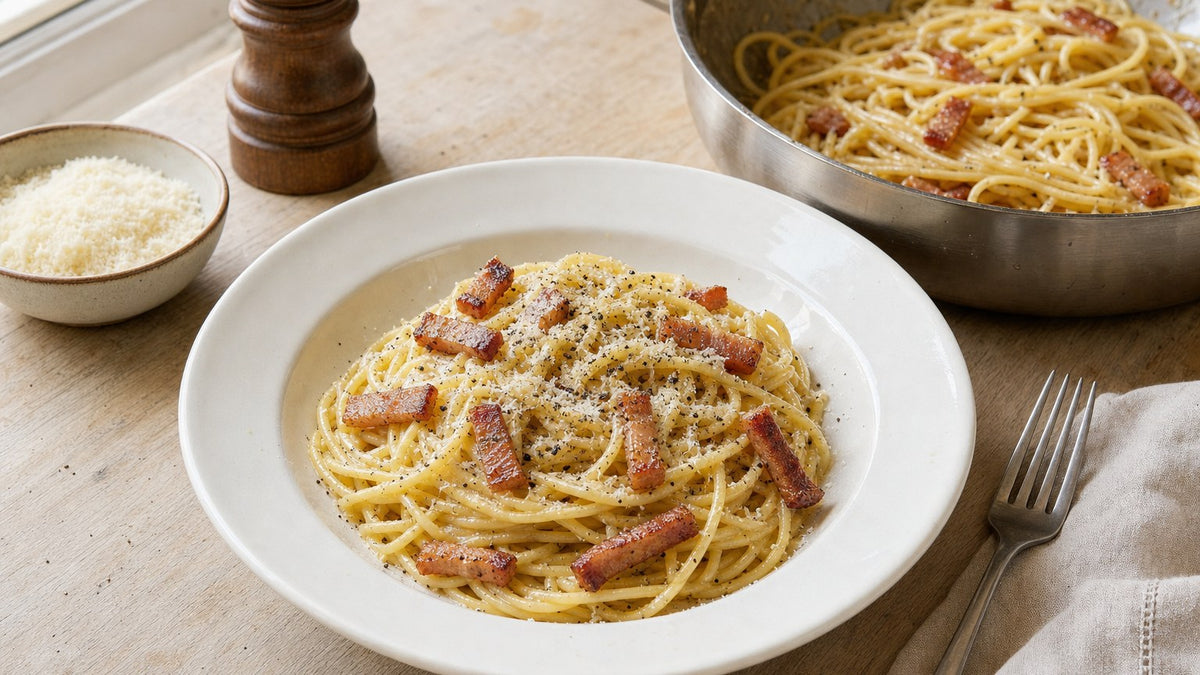
Spaghetti carbonara is Rome's great four-ingredient pasta: spaghetti tossed with crisp guanciale, egg, Pecorino Romano and plenty of black pepper, so that the egg and cheese become a silky sauce without a drop of cream. This carbonara recipe serves 4 and takes about 30 minutes. It works because of three small things: yolks plus one whole egg, for richness that still flows; pecorino whisked into the eggs before they meet the pasta; and a final toss in the pan off the heat with a splash of starchy pasta water, so the sauce turns creamy instead of scrambling.
| Preparation | 10 minutes |
|---|---|
| Cooking | 20 minutes |
| Total | about 30 minutes |
| Servings | 4 (see below for 2) |
| Difficulty | Medium (timing matters) |
| What you need | A 5–7 litre pot, a 28 cm sauté pan or deep frying pan, a bowl, a whisk, tongs, a fine grater and a mug |
Ingredients
- 400 g spaghetti
- 150 g guanciale (or pancetta), rind removed, cut into strips about 1 cm thick
- 4 egg yolks
- 1 whole egg
- 100 g Pecorino Romano, finely grated, plus extra to serve (or 50 g pecorino and 50 g Parmesan)
- 1½ tsp coarsely ground black pepper, plus extra to serve
- 1 tbsp salt for the pasta water
- about 250 ml pasta cooking water, scooped out before draining
How to make spaghetti carbonara
- Cut the guanciale. Trim the rind off the guanciale and cut it into strips about 1 cm thick and 3–4 cm long. It shrinks as the fat renders, so do not cut it too small.
- Put the water on. Bring about 5 litres of water to the boil in a large pot and add the salt. That is less salt than usual for pasta, because guanciale and pecorino are both salty.
- Make the egg and cheese paste. In a medium bowl, whisk the yolks and the whole egg with the grated pecorino and the pepper to a thick, slightly grainy paste. Set it aside near the hob.
- Render the guanciale. Put the guanciale into a cold 28 cm sauté pan over a medium-low heat and cook slowly for 8–10 minutes, stirring now and then, until the fat has turned clear and the strips are golden and crisp at the edges but still a little chewy. Take the pan off the heat. If there is much more than 3–4 tablespoons of fat, pour some off and keep it.
- Cook the spaghetti. While the guanciale renders, drop the spaghetti into the boiling water and cook it for 1–2 minutes less than the packet says, until still firm to the bite. Just before draining, scoop out about 250 ml of the cooking water.
- Loosen the egg mixture. Whisk 2–3 tablespoons of the hot pasta water into the egg paste, one at a time, until smooth and pourable. This warms the eggs gently and is your first defence against scrambling.
- Toss everything off the heat. Lift the spaghetti straight from the pot into the sauté pan with tongs; a little water coming with it is fine. Toss for 30 seconds to coat every strand in fat. Check that the pan is no longer sizzling, then pour in the egg mixture and toss vigorously for 1–2 minutes, adding pasta water a tablespoon at a time (about 60–100 ml in total), until the sauce is glossy and clings to the pasta.
- Serve straight away. Twirl the spaghetti into nests in warm bowls and spoon over any guanciale left in the pan. Finish with more pecorino and a generous grind of pepper. The sauce tightens as it cools, so eat it at once.
What to cook carbonara in
Carbonara needs a tall pot that brings plenty of water to a rolling boil and a wide pan where the sauce comes together. Spaghetti wants about 1 litre of water per 100 g, so a 24 cm stockpot holding 6–7 litres is the right size. Browse our stockpots or the cookware we have picked out for pasta.
A 24 cm stockpot for the pasta water
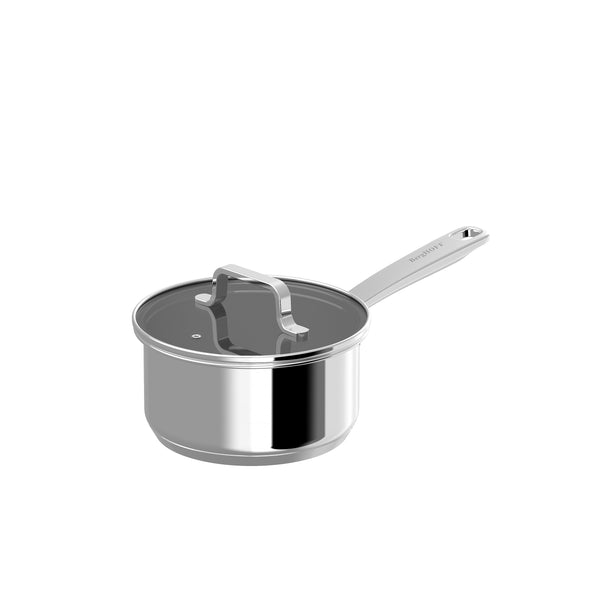
The Helix Stainless Steel Covered Stockpot 24 cm holds 6.6 litres and is 15 cm deep inside, so 400 g of spaghetti has room to move. The capacity markings inside let you pour in 5 litres without measuring, and the glass lid with a steam vent gets the water boiling faster. It is made of recycled stainless steel with a capsulated base that heats quickly and evenly on all hobs, including induction, and is dishwasher safe.
A 28 cm sauté pan for the sauce
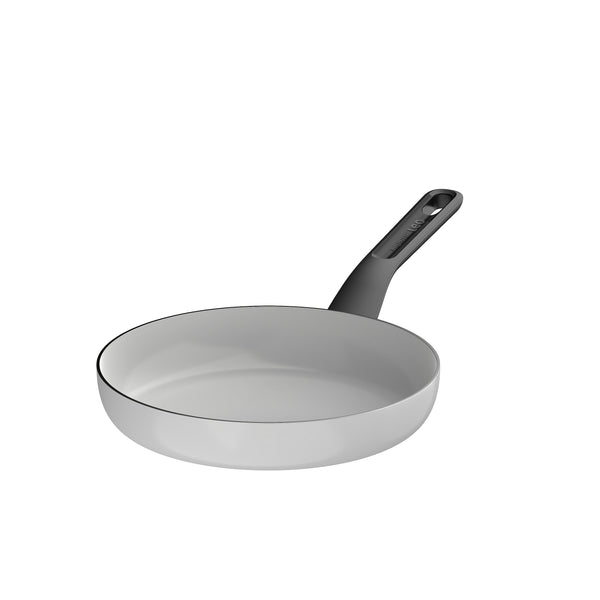
The pan is where carbonara succeeds or fails. It must be wide enough to toss 400 g of spaghetti, deep enough to hold the pasta water you add, and it should give up its heat gradually once it leaves the hob: warm enough to thicken the egg, never so hot that it sets into curds. The Helix Stainless Steel Covered 2-Handle Sauté Pan 28 cm holds 5.5 litres and is just over 9 cm deep, and its two short handles let you grip it with both hands and swirl the pasta. The 18/10 stainless steel body has an encapsulated base that conducts heat fast and evenly, so the guanciale renders without hot spots. It works on all hobs, including induction, and is dishwasher safe. For a lighter non-stick option, browse our sauté pans; our guide Sauté pan or frying pan: what's the difference? explains why the deeper shape suits pasta.
Setting up a kitchen or replacing tired pots? A pot set is the simplest way to complete your kitchen: stockpot, saucepan and casserole in one go.
Tips and common mistakes
- Scrambled egg instead of sauce. The pan was too hot. Let the sizzling stop before the pasta goes in, loosen the egg paste with hot pasta water first and keep everything moving. If you are nervous, tip the pasta and guanciale into the bowl of egg mixture and toss there instead: a little less creamy, but it will not scramble.
- Stiff, gluey sauce. Too little pasta water, or too long a wait. Add water a spoonful at a time and have warm bowls ready.
- Thin, watery sauce. Too much water at once. Keep tossing for another minute; the sauce thickens as the cheese melts, and a little more pecorino rescues it.
- Cheese that will not melt. Ready-grated cheese is often coated to stop it clumping and stays grainy. Grate a block yourself on the fine side of a grater.
Variations
Carbonara for two
Halve everything except the whole egg: 200 g spaghetti, 75 g guanciale, 2 egg yolks plus 1 whole egg, 50 g pecorino and 1 tsp pepper. Cook the pasta in about 3 litres of water with 2 tsp salt and keep 150 ml of it. A smaller batch comes together faster, so have the pasta water within reach before the eggs go in.
Pecorino, Parmesan or both
All pecorino is the Roman way: sharp, salty and tangy. Half pecorino and half Parmesan is milder and nuttier, a good choice if children are eating; all Parmesan gives the smoothest, mildest sauce.
What to serve with carbonara
In Italy carbonara is a first course; at home it is a whole dinner, and all it needs is something crisp and sharp alongside: a green salad with lemon and olive oil, or bitter leaves such as chicory or rocket. Like dishes where eggs do the work? Try our one-pan shakshuka. For more weeknight dinners from one pot or pan, see our chili con carne and butter chicken.
Carbonara FAQ
How do I stop carbonara from scrambling?
Heat control is everything. Take the pan off the hob before the pasta goes in and let the sizzling stop. Loosen the egg paste with a few spoonfuls of hot pasta water so the eggs warm gradually, then keep tossing until the sauce is glossy. Egg yolks start to set at around 65 °C; the warmth of the pasta thickens them without taking them past that point, as long as the pan itself is no longer hot.
Can I use bacon instead of guanciale?
Yes. Pancetta is the closest match, and thick-cut unsmoked streaky bacon is next best. Both are leaner than guanciale, so add a teaspoon of olive oil to the pan at the start. Smoked bacon works, but it will no longer taste like a Roman carbonara.
Does authentic carbonara have cream?
No. The creaminess comes from egg yolks and finely grated pecorino emulsified with the guanciale fat and a little starchy pasta water. Cream makes the sauce heavier and masks the cheese and pepper; garlic, onion and parsley do not belong in the classic version either.
How much pasta water do I need for carbonara?
Scoop out about 250 ml so you have more than you need, then use it in stages: 2–3 tablespoons to loosen the egg paste and roughly 60–100 ml more while tossing. For two people, 150 ml in reserve is plenty.
The photo is illustrative (created with AI).